IMAGO DEI
Process… from the solitude of the studio… energized by joy in the design, the designer and the community of artists around me...
Blog : Imago Dei
As with most artists, I love the aloneness of the studio. That said, I have learned to love my art community—understanding local artists, affirming their work, giving and receiving suggestions, and growing as I allow them into my process.
In Asian traditions, spirituality and art share a similar and sometimes overlapping space. The concept of Imago Dei, the belief that mankind’s art naturally unfolds as an imprint of a creator God, motivates and encourages me as I paint. Because he is a maker, human beings make…
Creativity and Surprises
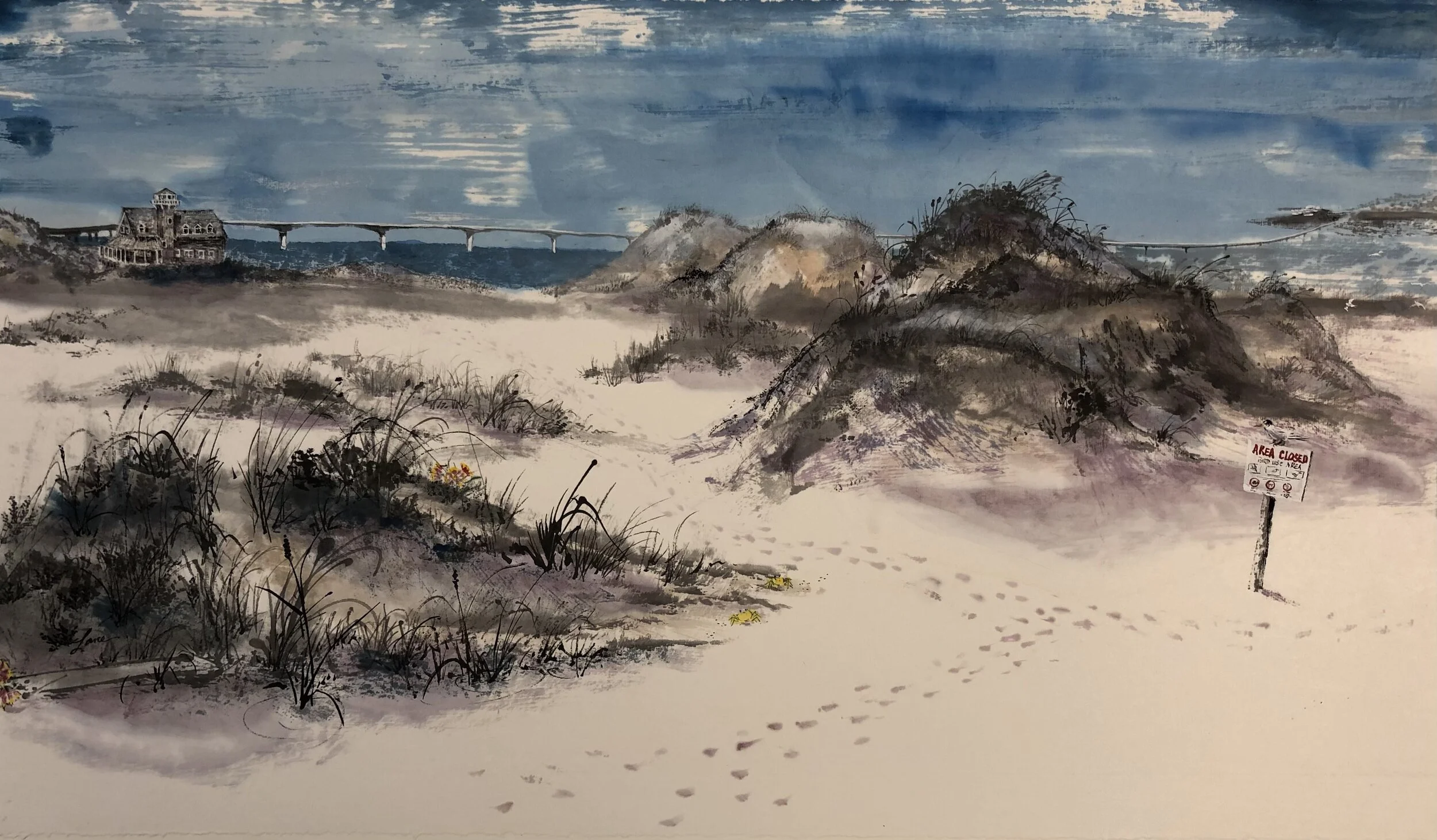
I came to the final steps of mounting this painting of the coastal dunes of Pea Island, NC. I usually mist the paper before applying heat to the silicone film. I have done this many times without a mishap, but this time I was surprised to see large drops of water on the paper. “Not a big problem” — I knew the heat press would make the water evaporate quickly. What I didn’t know was some chemistry was going on between the paper and tiny particles of dried ink that had made their way onto the surface, and when I peeked at my press results, there was a dark blob in the middle of my sandy path. I pressed and pressed and rubbed and pressed, but the blob remained.
It was time for a creative solution that would turn this unsetting surprise into a profitable one. Almost immediately after I opened my mind up to alternatives, I realized I could make footprints in the sandy path, and then I realized that perhaps this trail of footsteps could tell a story about the human impact on coastal environments. Have a look. The trail narrows but doesn’t disappear going past the sign warning against trespassing in the “bird nesting” area. The good news is that the trail of footsteps is wider and stronger as it veers away from the sanctuary. Humans… we are messy and unpredictable but…teachable…
Designer Dusting
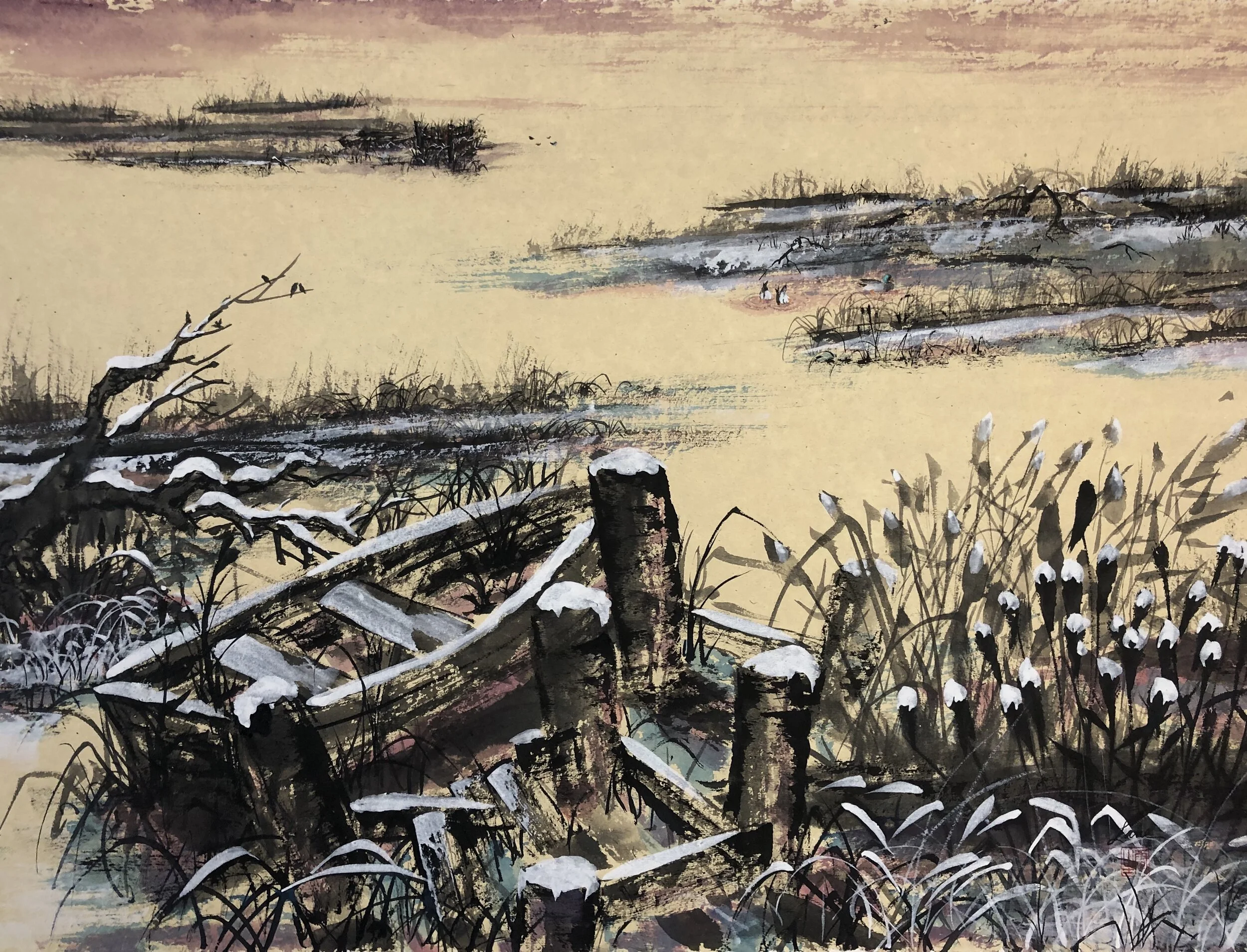
Transitional coastal marshes are a wonderful metaphor depicting the paradoxes of change. Some things of man in the foreground space are temporary, decaying, and collapsing back into the shallows where they will ultimately be forgotten; another eddie in the middle-ground holds a family of ducks serenely oblivious to the outside and just enjoying the moment; the third liminal turn in the creek holds intentional hunters, waiting in the duck blind, decoys deployed. This is the edge where change happens-- it is full of opportunity, it is happy & risky, and… a little sad, all at the same time, and then suddenly, everything is buffered by a “designer”-like dusting of snow that outlines the contours of the spaces.
Quiet Now
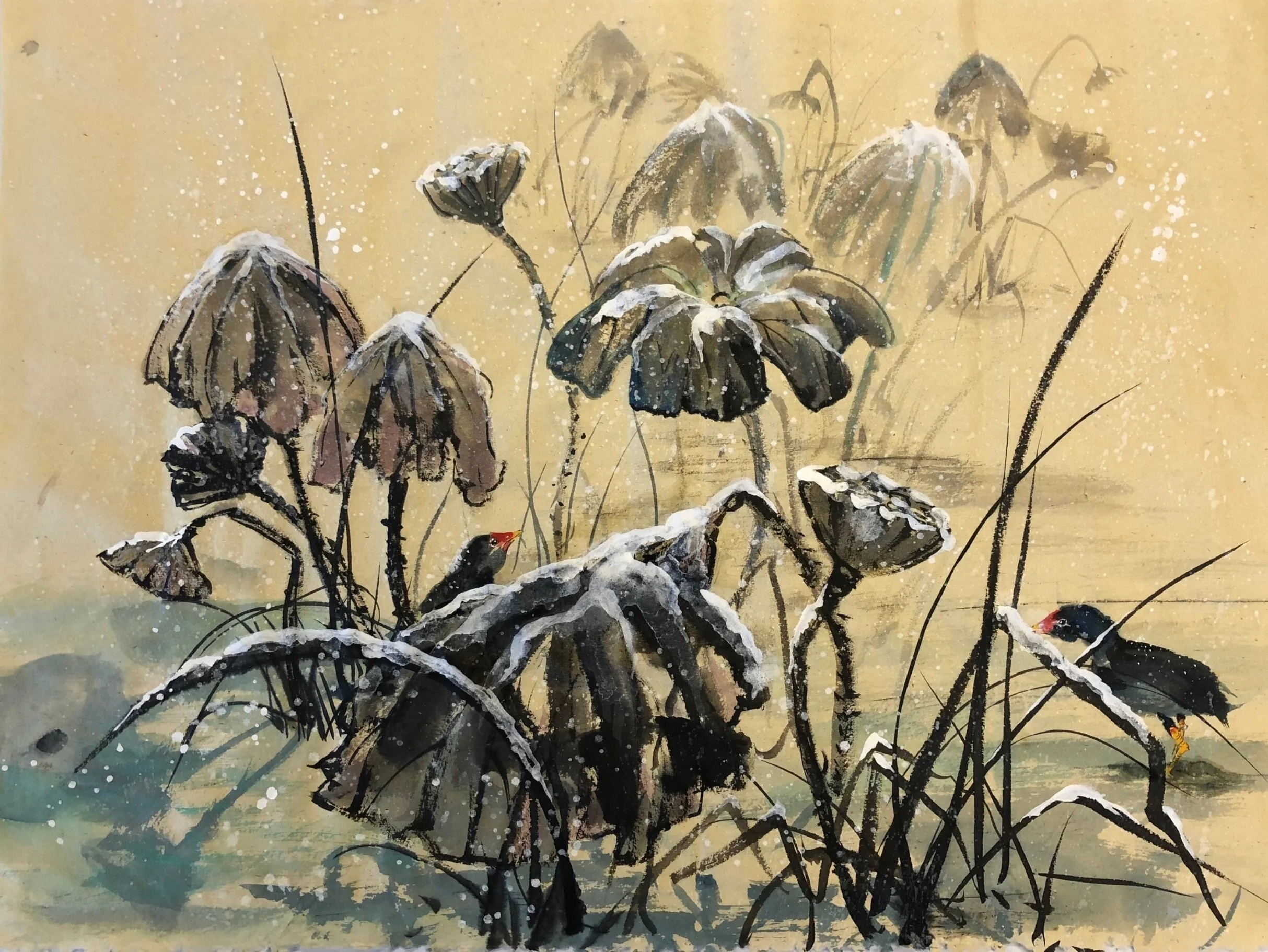
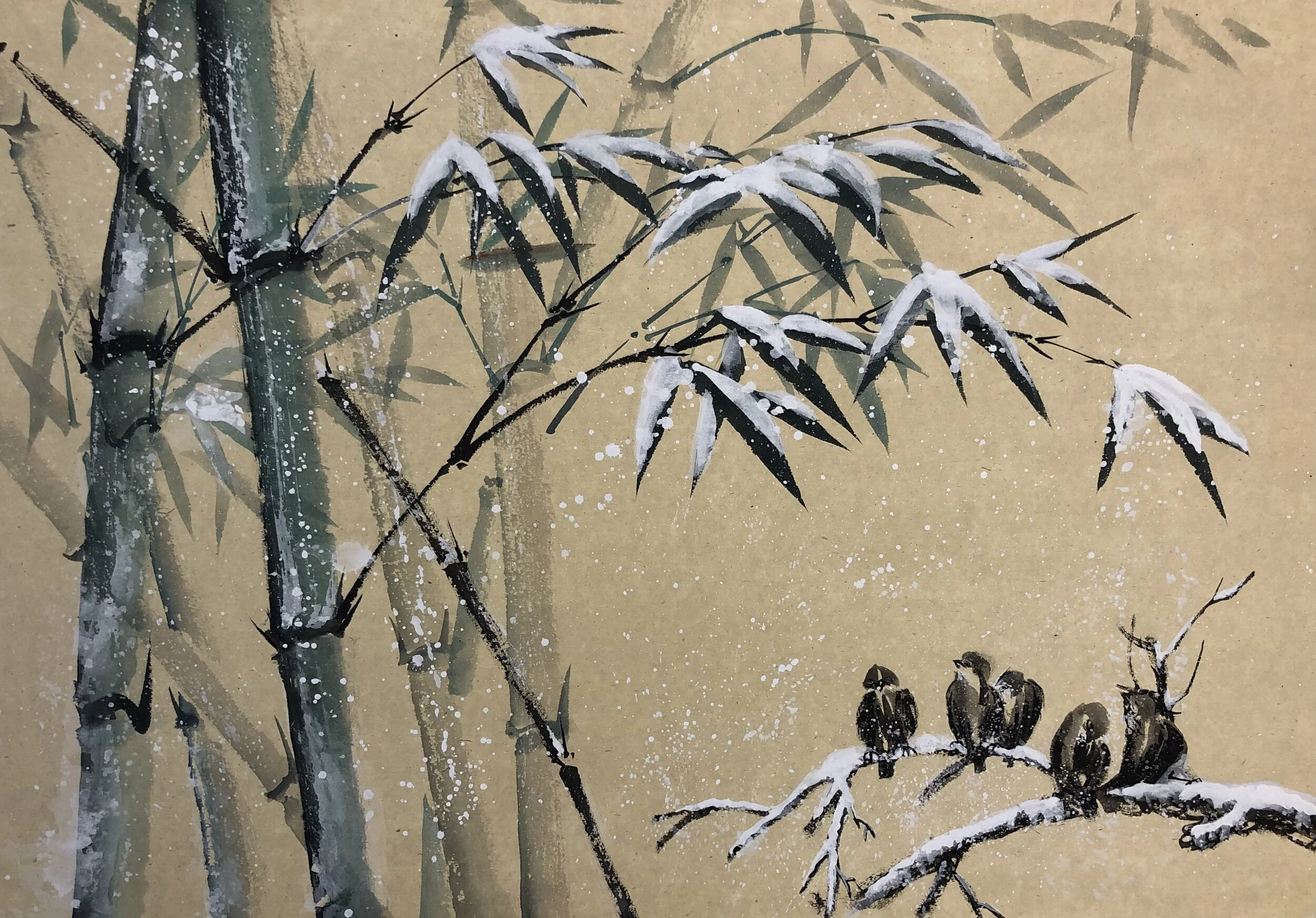
Aesthetic and spiritual meditations sometime merge for me. The subject matter of “Quiet Now” and “Captured By Early Snow” accent a generative place of quietness that I need right now— a space for slowing down, shaping what I believe about my center in the designer’s plans and ways. This is like a beautiful yoga posture— stretching yet peaceful…and needed in these trying times of uncertainty, conflict and confusion.
“Captured By Early Snow”
“Quiet Now”
Fire Storm: Praying for a Change in the Wind
I have a friend who has worked as a firefighter in the seasonal forest fires that have raged out West, he said that the painting reminded him of the feeling he got when he was out there in the woods. His words encouraged me since that is basically what was intended in this work— a feeling, a heavy feeling of discouragement and distrust approaching in multiple layers of smoke and glowing on several fronts, an acrid scent in the air, and all of it waiting and feeding on the wind, its shifting directions and strength… Our communities need a change in the wind, some alternative narratives that do not fan the flames. Let’s ask prayerfully for that.
“Last Bridge Before Home”
This monoprint pour was one of 6 created for a commission. I chose what I considered the best two and created works for some friends of mine. It is really sweet when paintings can so directly and swiftly find a home…. “Last Bridge Before Home” came as an afterthought while doing some demonstrations with my Marco Polo sumi-e buddies. Slowly it has grown on me— the exquisite feeling of being on the final stretch of road, the familiar path, the last bridge before arriving home. This is common to all of us…”country road take me home” it has been crooned many a time, right? But for me in the midst of all the pandemic upheaval and racial unrest in our communities at this time, this feeling has taken on new meaning. I don’t mind facing problems and trying to find creative responses to crises— this can be engaging and rewarding, and it is especially exhilarating when everyone senses that an answer is around the corner! That said, when long-term uncertainty about a solution settles in and the options and understandings currently being tossed here and there don’t seem promising, this is unsettling, and I find myself longing for crossing that last bridge — the expectation of home and happiness felt at the end of a long journey… I don’t want to lose heart but I do find myself straining toward that final bridge…
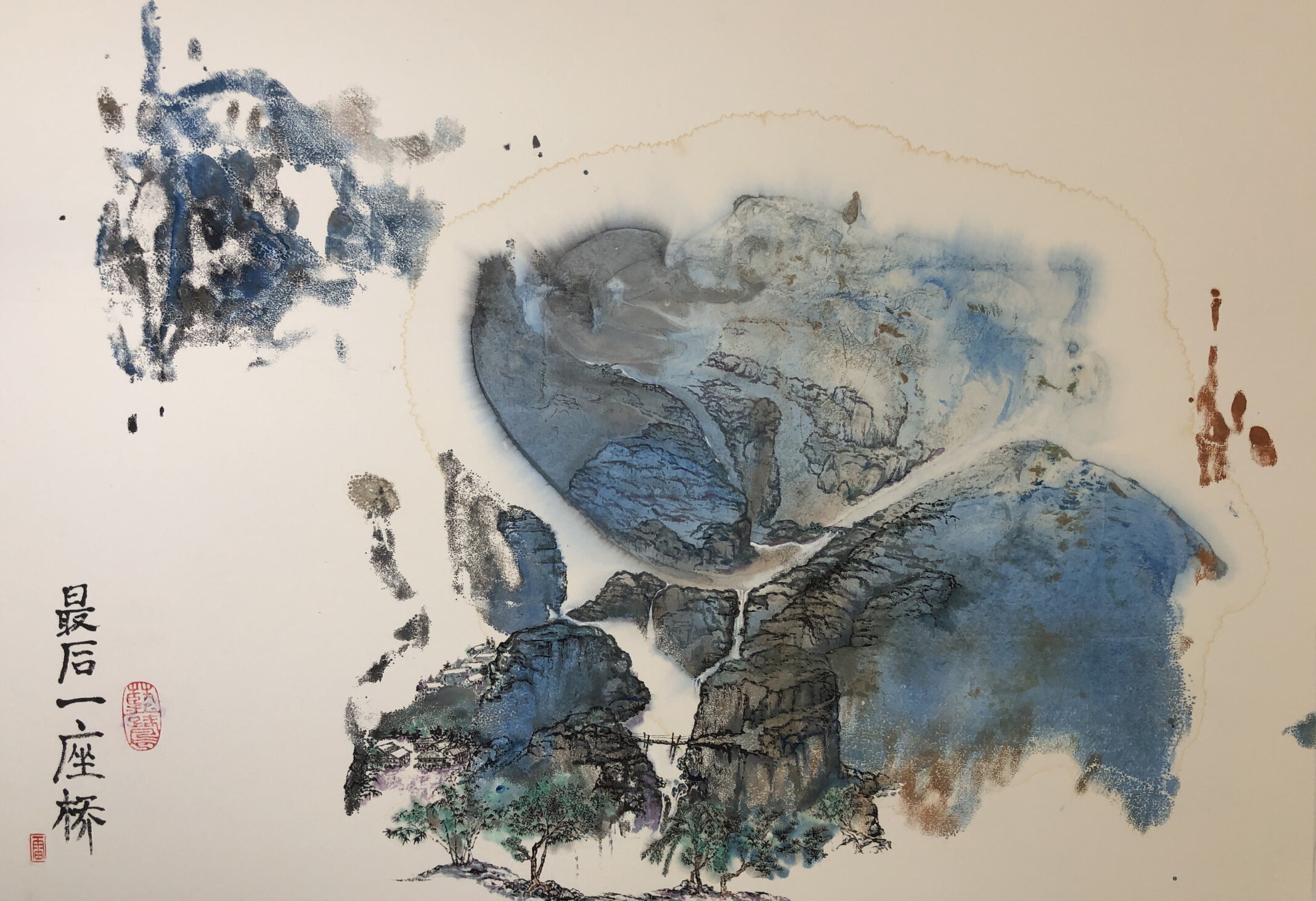
“Last Bridge Before Home”
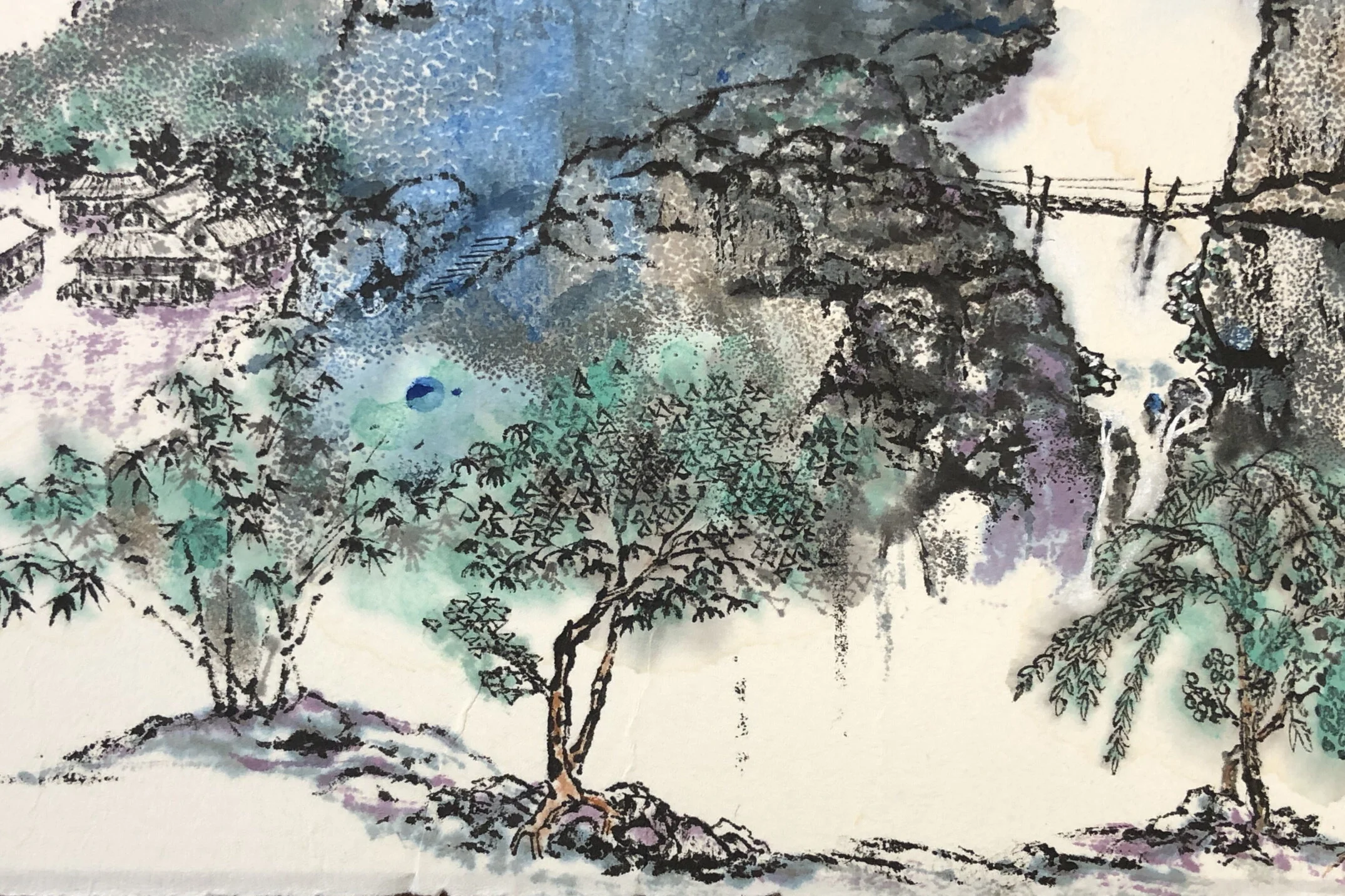
“Last Bridge Before Home” (close-up)
Reservoirs
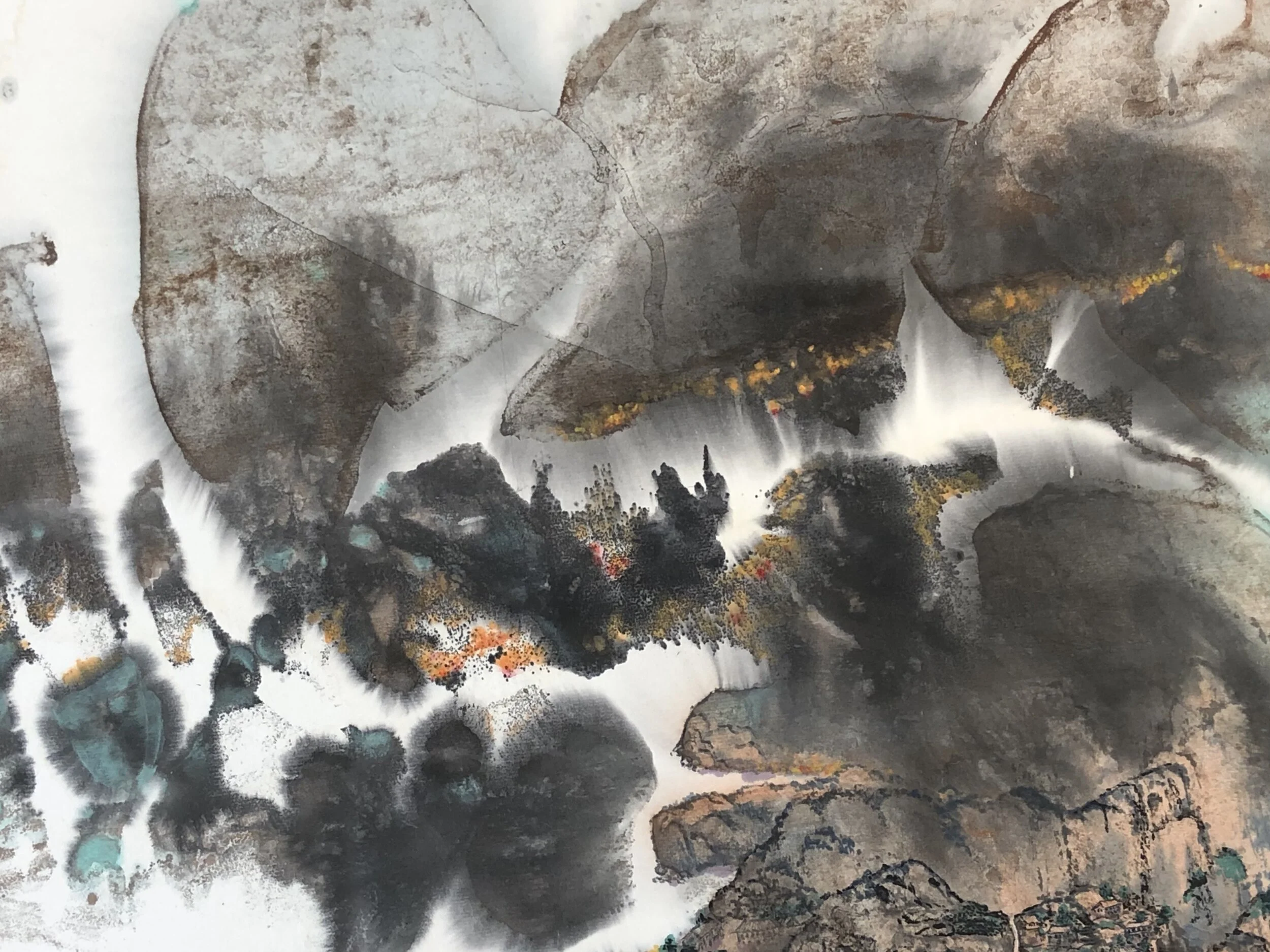
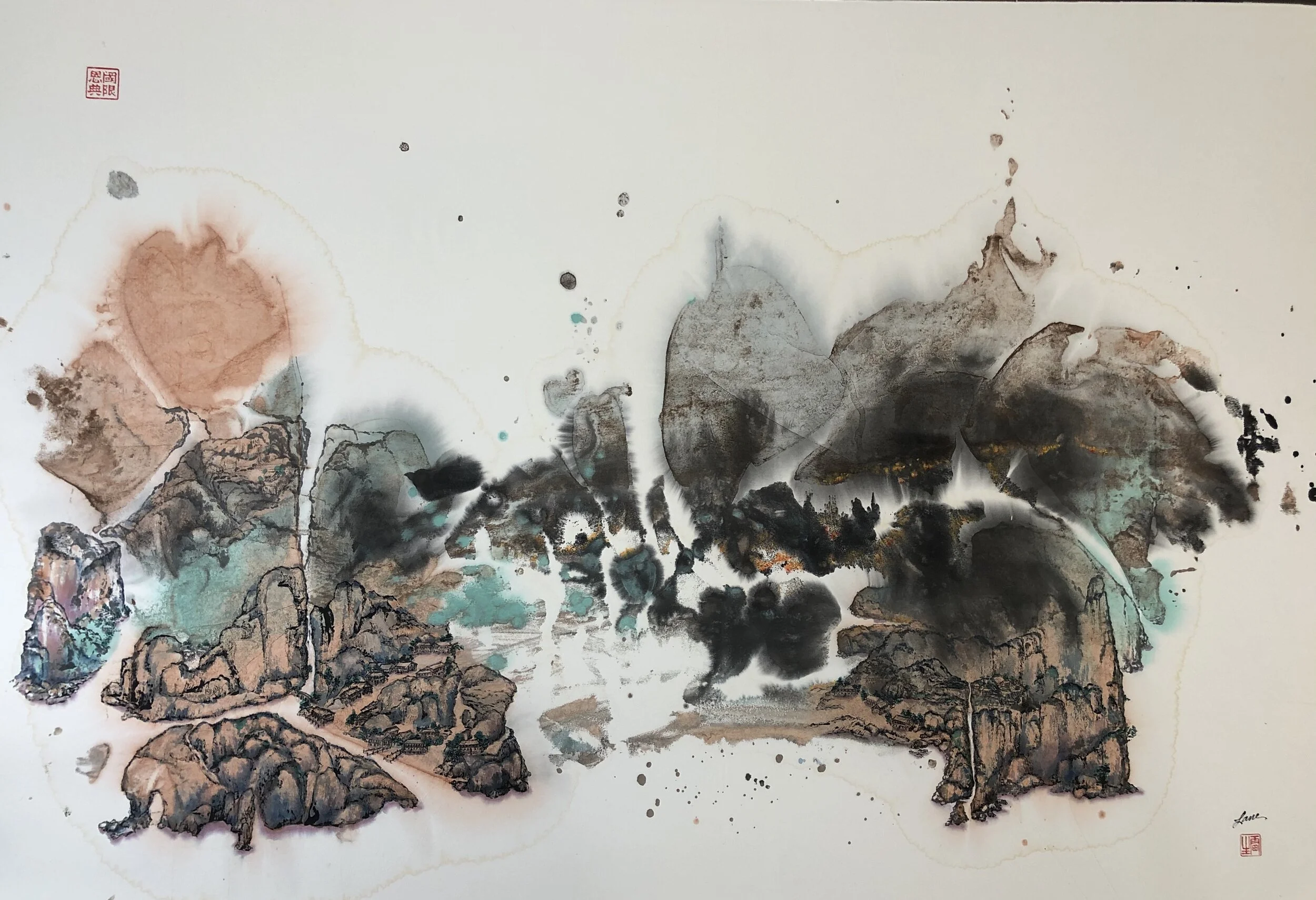
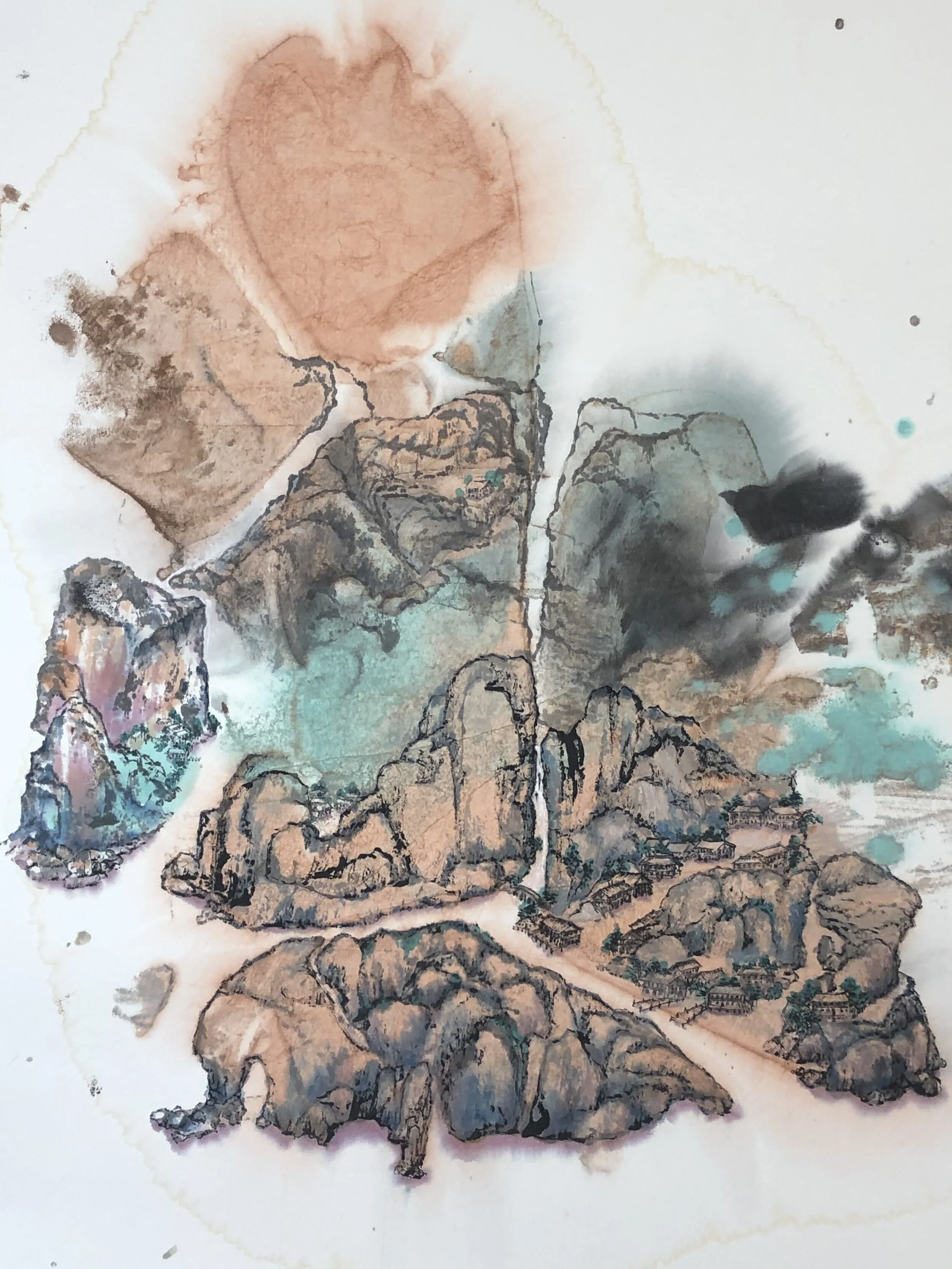
Landscapes emerging from my pours and suminagoshi methods have become, for some reason, irresistible of late. From the beginning, the uncertainty of a pour and the beautiful “waterfall” opportunities captured me. They may be discovered and developed through creativity that is alert to all possibilities and this process seemed a helpful metaphor for our pandemic climate. However, more recently the focus of the paintings has migrated to the source of the flow— the reservoirs from up and far away that feed our hope. They remind me that when I feel helpless and my energies are spent, blessing comes from someplace my eyes cannot see. Reservoirs of grace and hope.
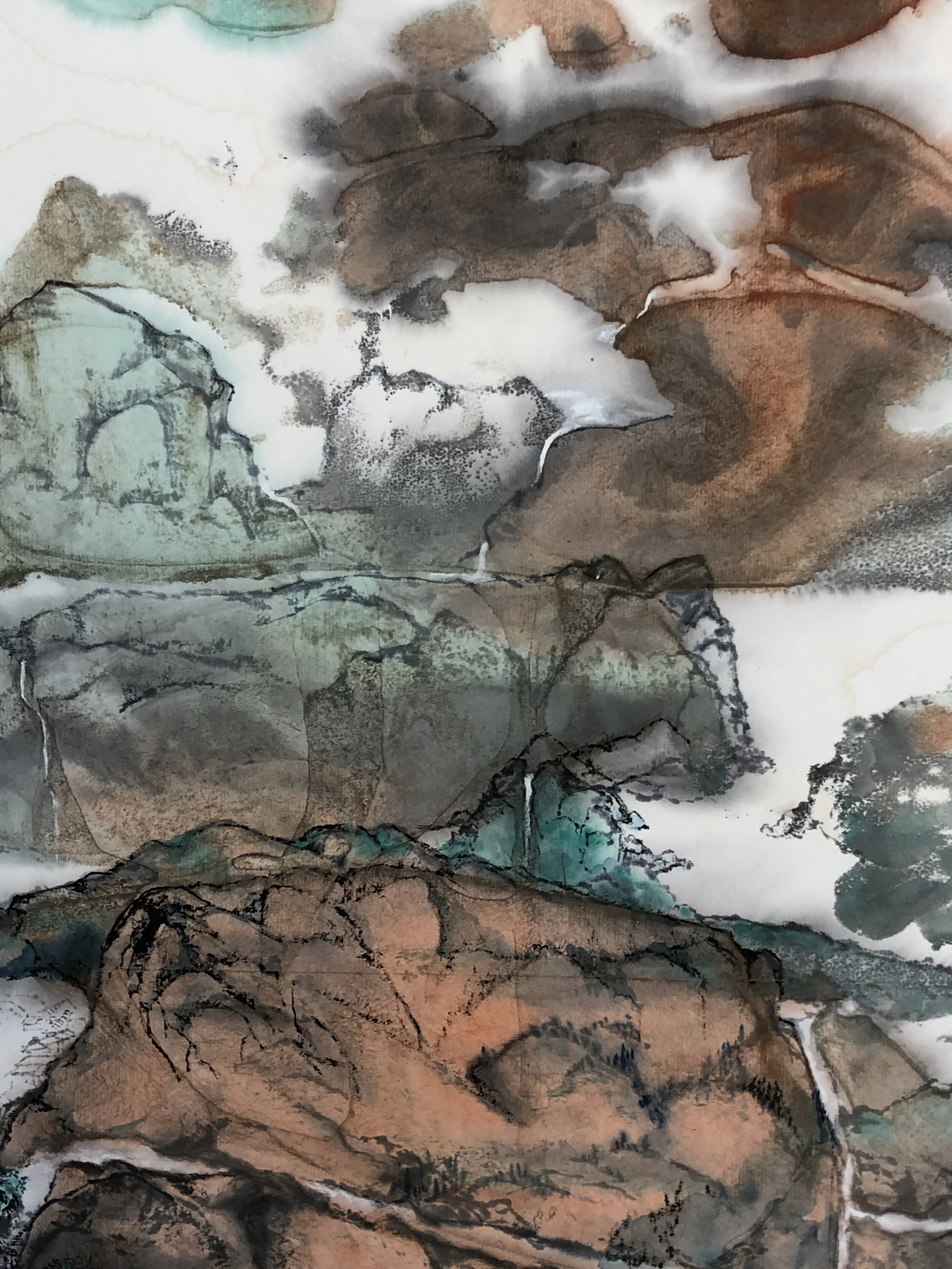
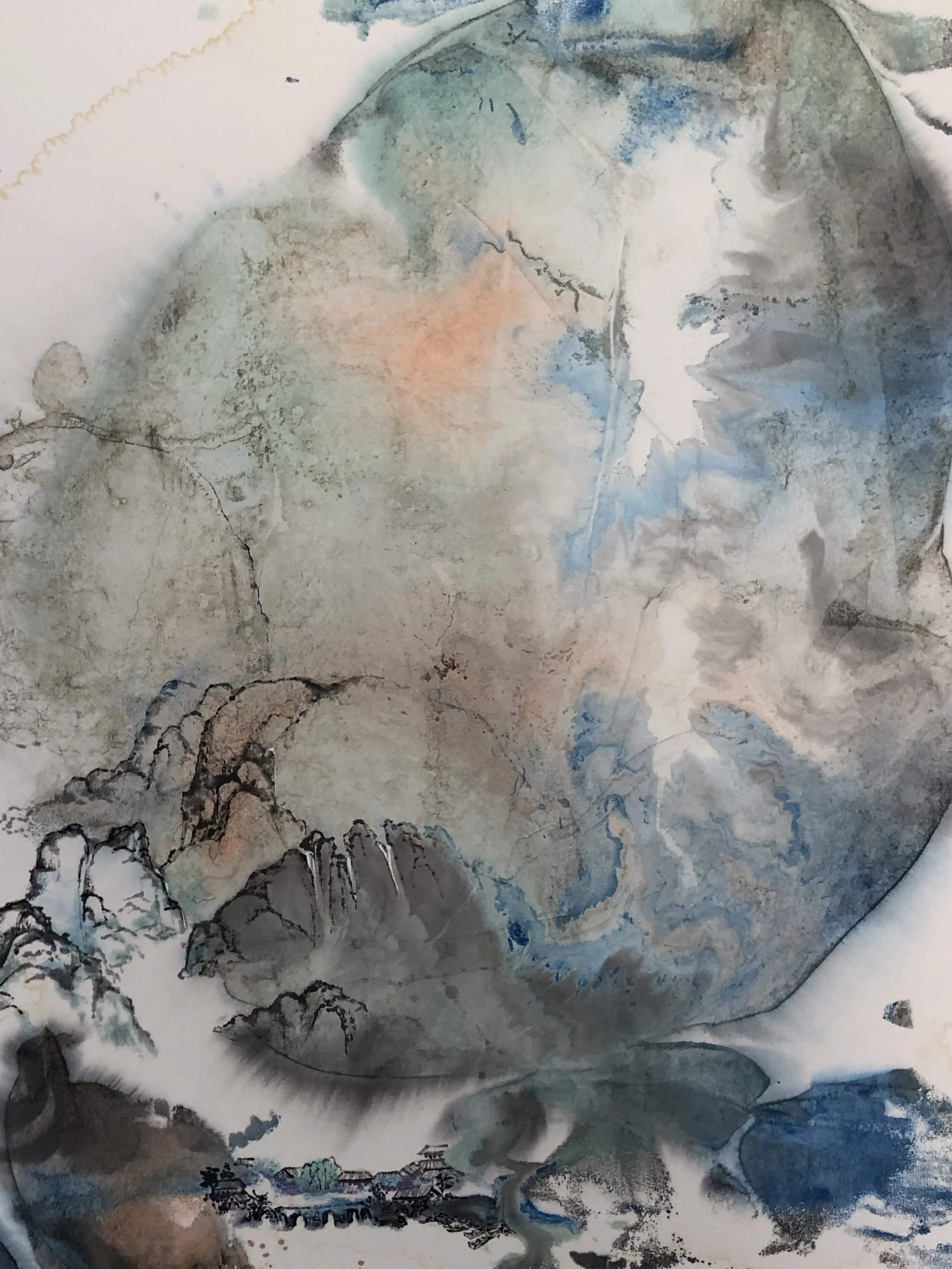
“Lyrical”
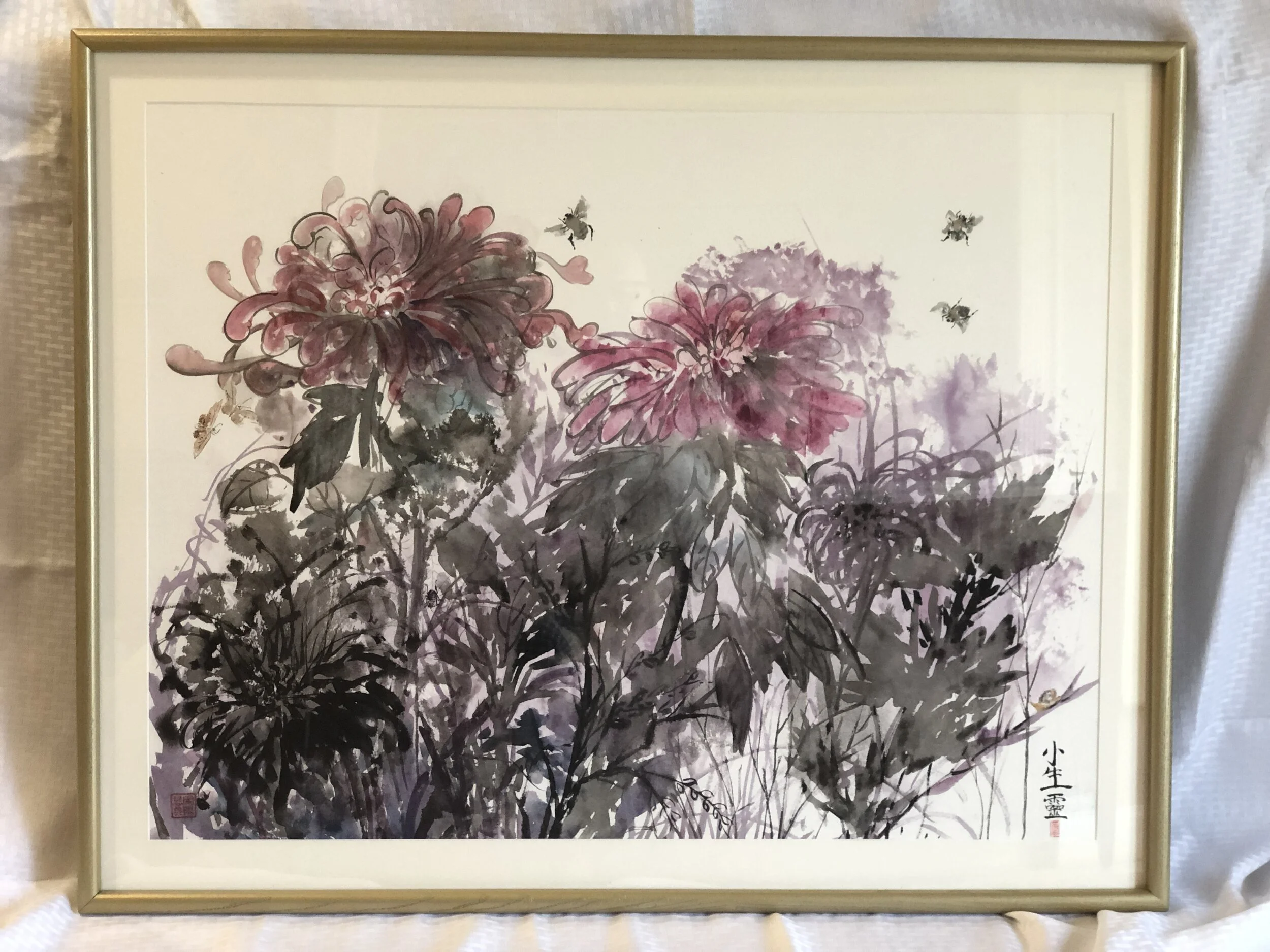
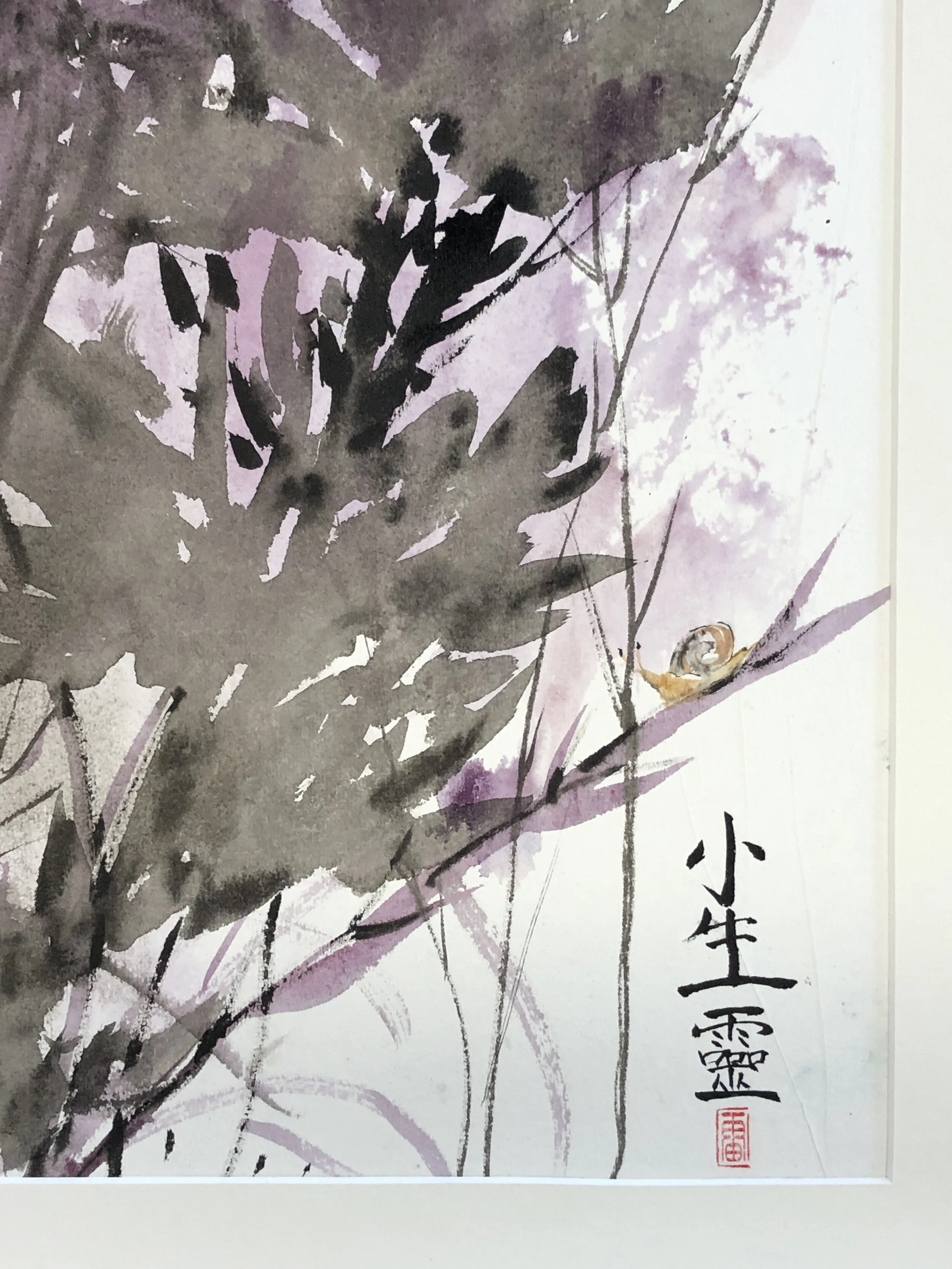
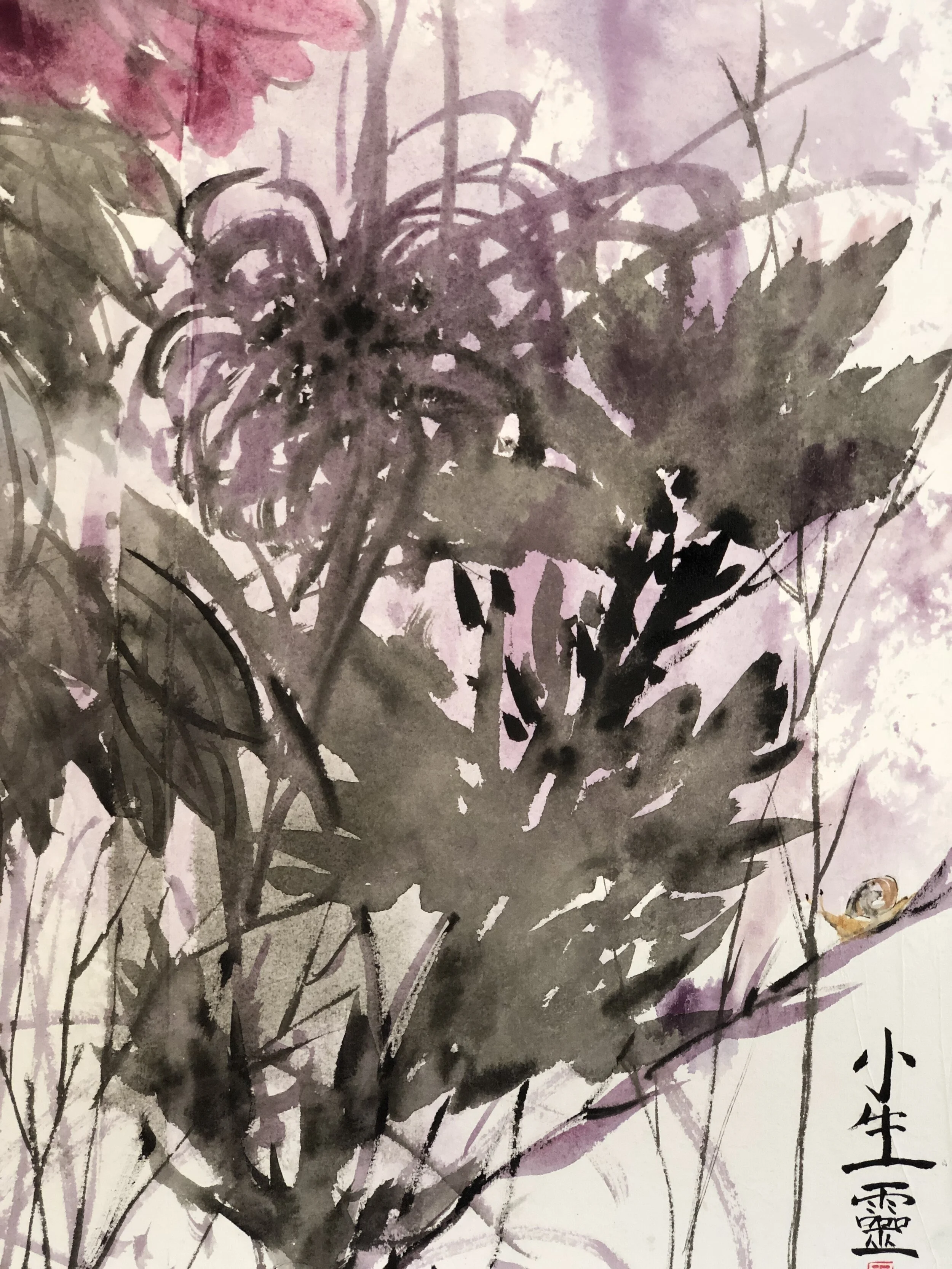
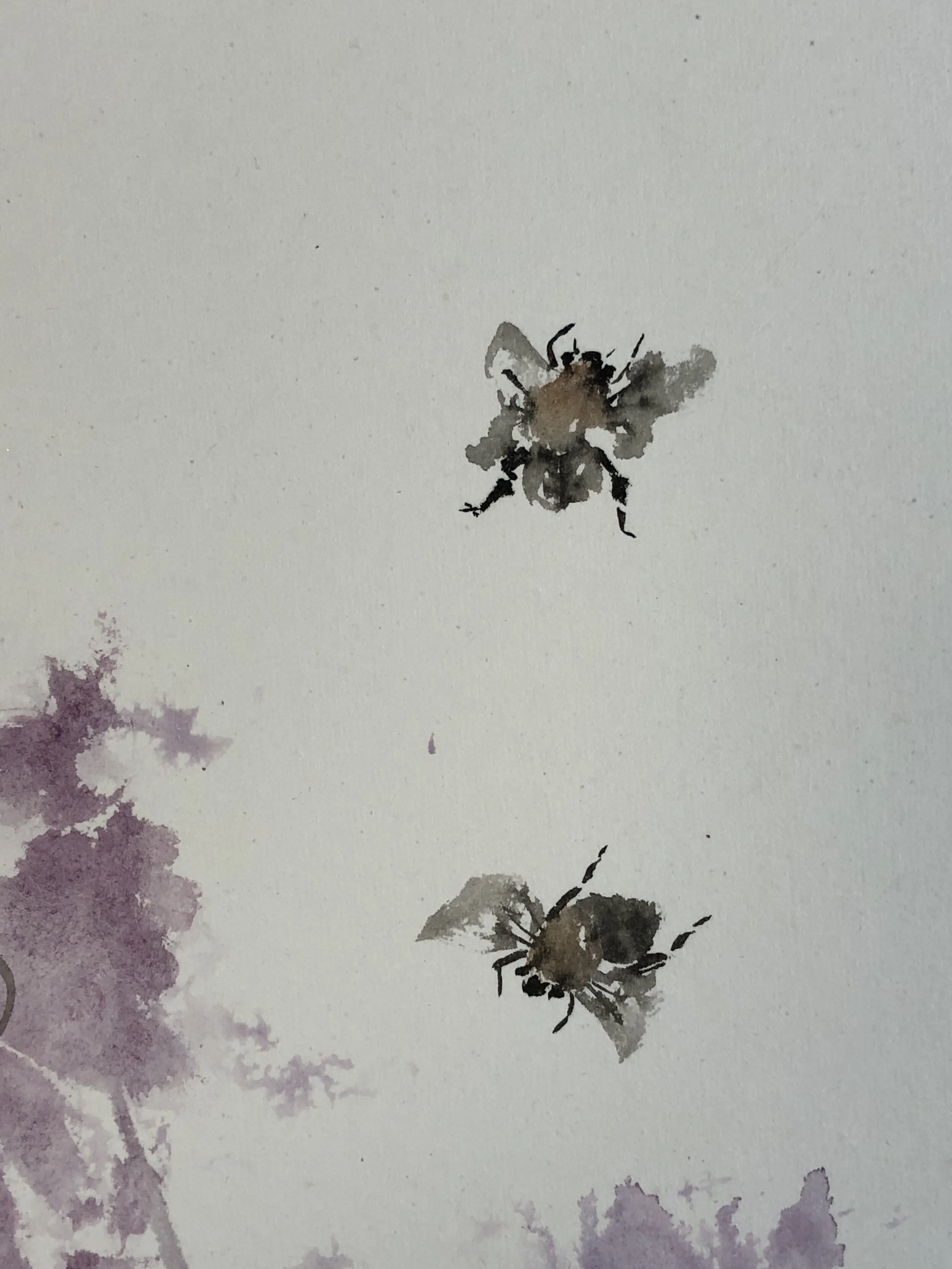
Recently one of my paintings, “Garden Community,” was described as “lyrical,” and since I didn’t know exactly what this meant, I’ve given the adjective some thought. At Vocabulary.com I found the following description:
“Something that's lyrical is beautifully full of emotion. Don't be surprised if a lyrical passage in the book you're reading makes you cry a little bit. The word lyric, and its connection to the words of a song, provides one hint about the adjective lyrical, which can mean "appropriate for singing." When a movie, book, dance, or work of art gives you the same feeling as the most beautiful music, you can also describe those things as lyrical. The musical connection goes all the way back to the Greek root word, lyra, or lyre.”
Sounds pretty good, but I guess the question is— does it make me want to sing? I’ll include a few close ups of the work below.
Compassion In The Storm
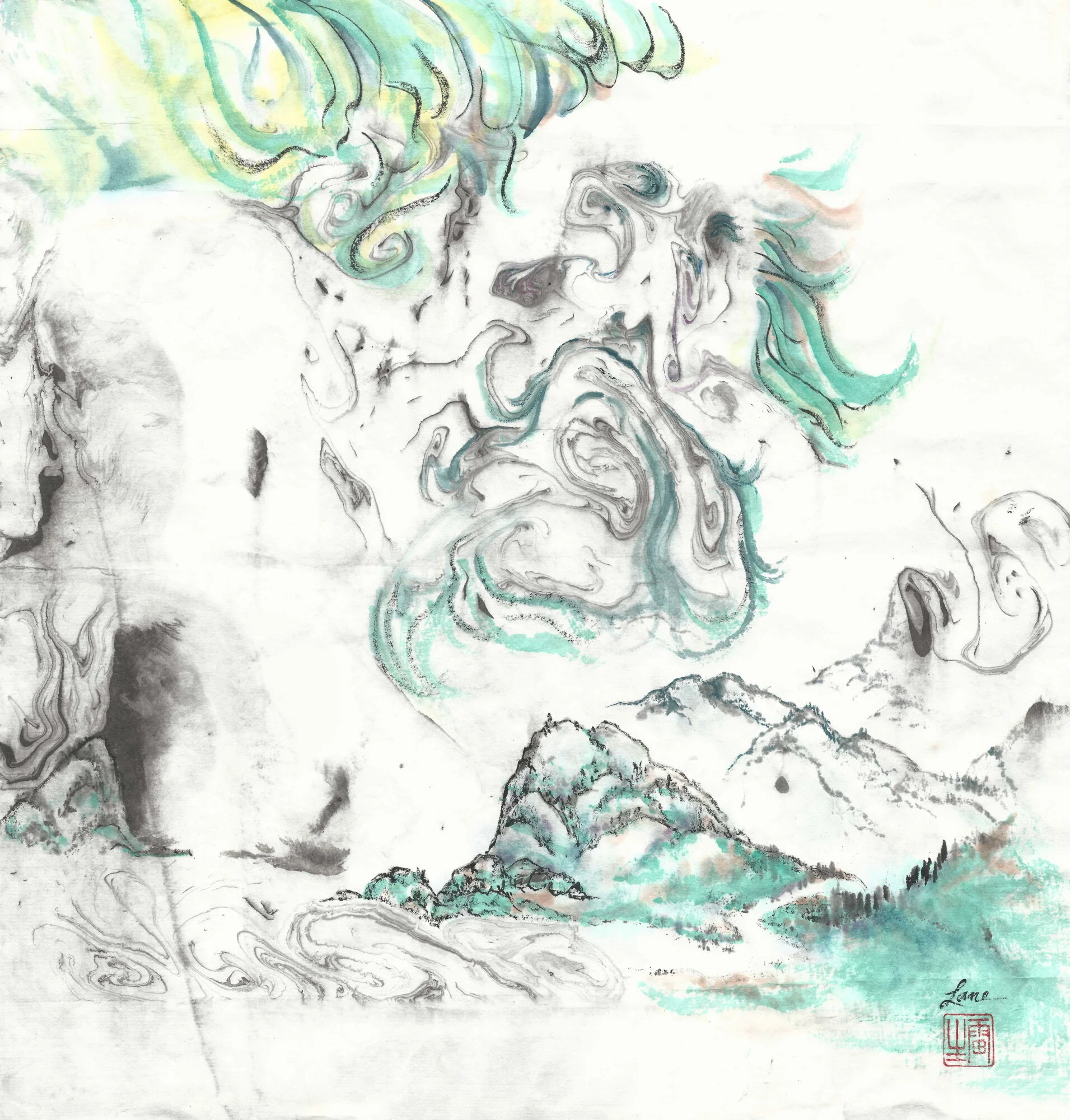
This suminagashi speaks of strength and goodness expressed during these trying times. The face of compassion emerged quickly but it took several days for the strong right arm and hand to appear… to my slow processing brain. Then, Isa. 41:10 came to mind….
Pine Tree Politics

Suminagoshi prints underscore design that emerges in seemingly random pours. I added the pine tree because is symbolizes longevity and thriving where weather is severe. Can you see the dragons? Title: "Pine Tree Growing By Dragon Rock”
Hope Flows Down
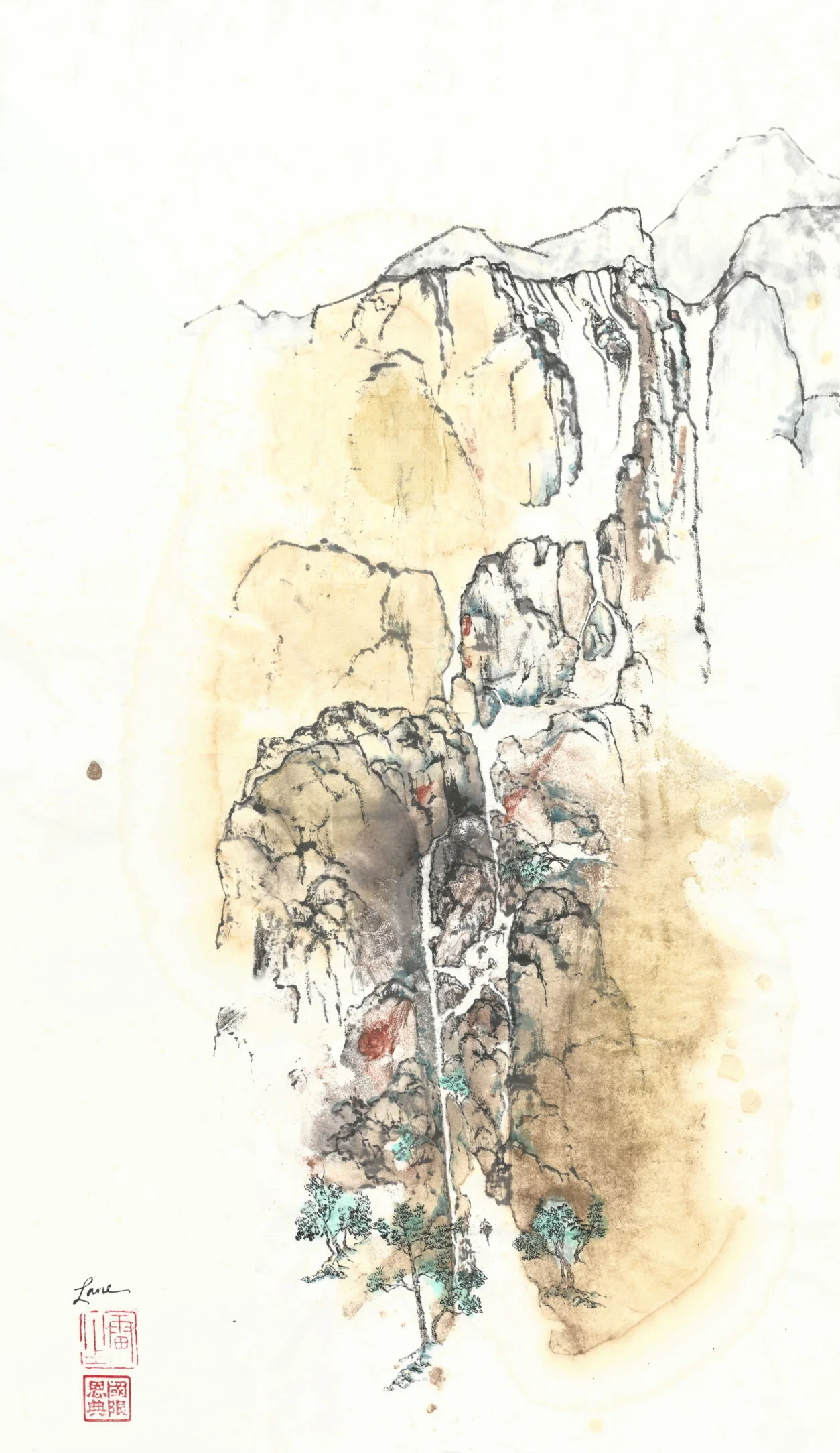
This third painting from the original 4 pours takes a bird's eye view. Hope comes slowly, flowing down from a fountainhead that is outside and far from our own abilities and strength. It took some time to see it but finally the system of waterfalls emerged. The first chop is my name but the one below it is “yuxian endian” translatable as “threshold grace.” This happens to be the name of my studio but seemed to fit the waterfall motif in this work— the slow mediation of hope and grace from the tops of the mountains to the valley floor.
Little Living Things
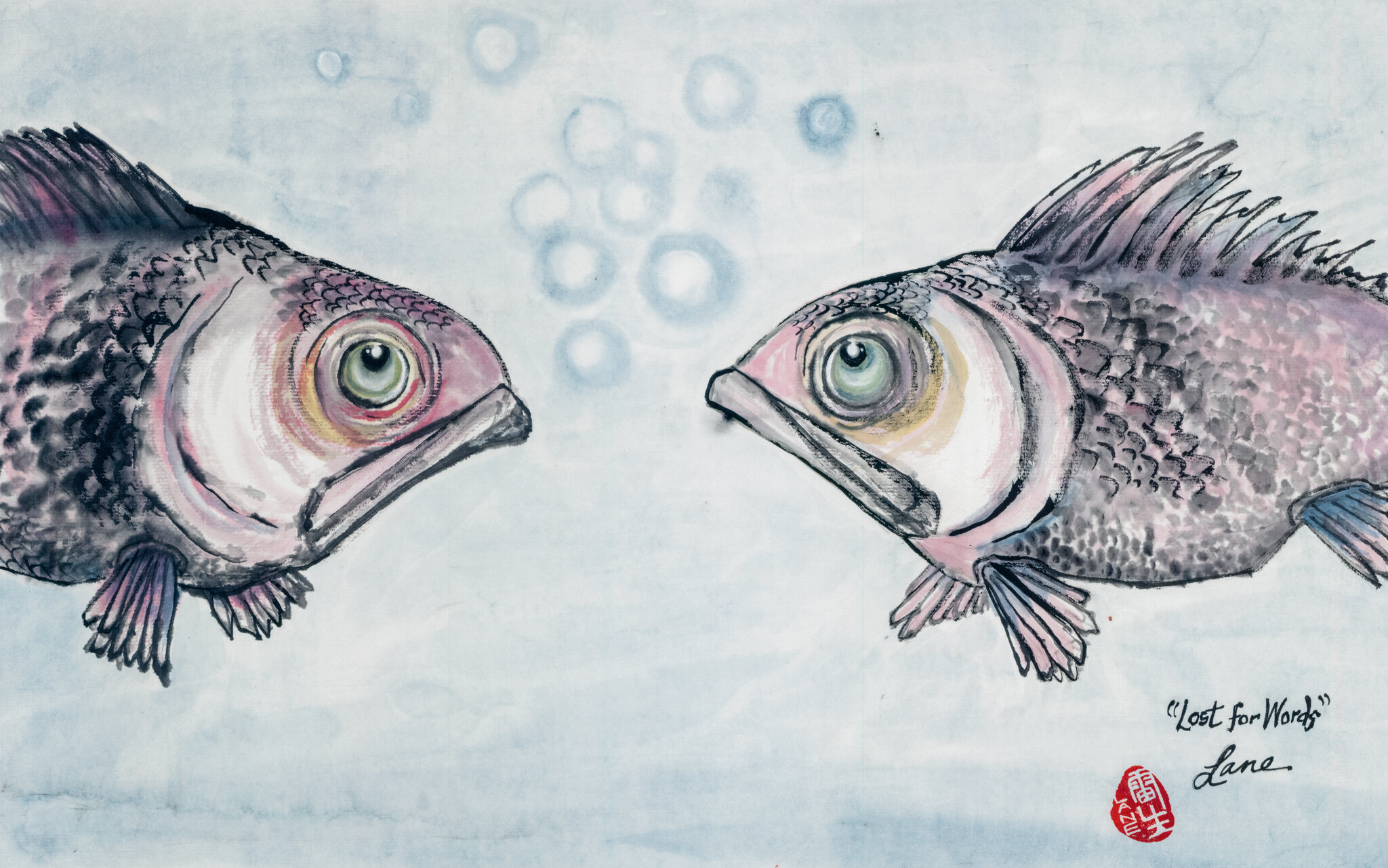
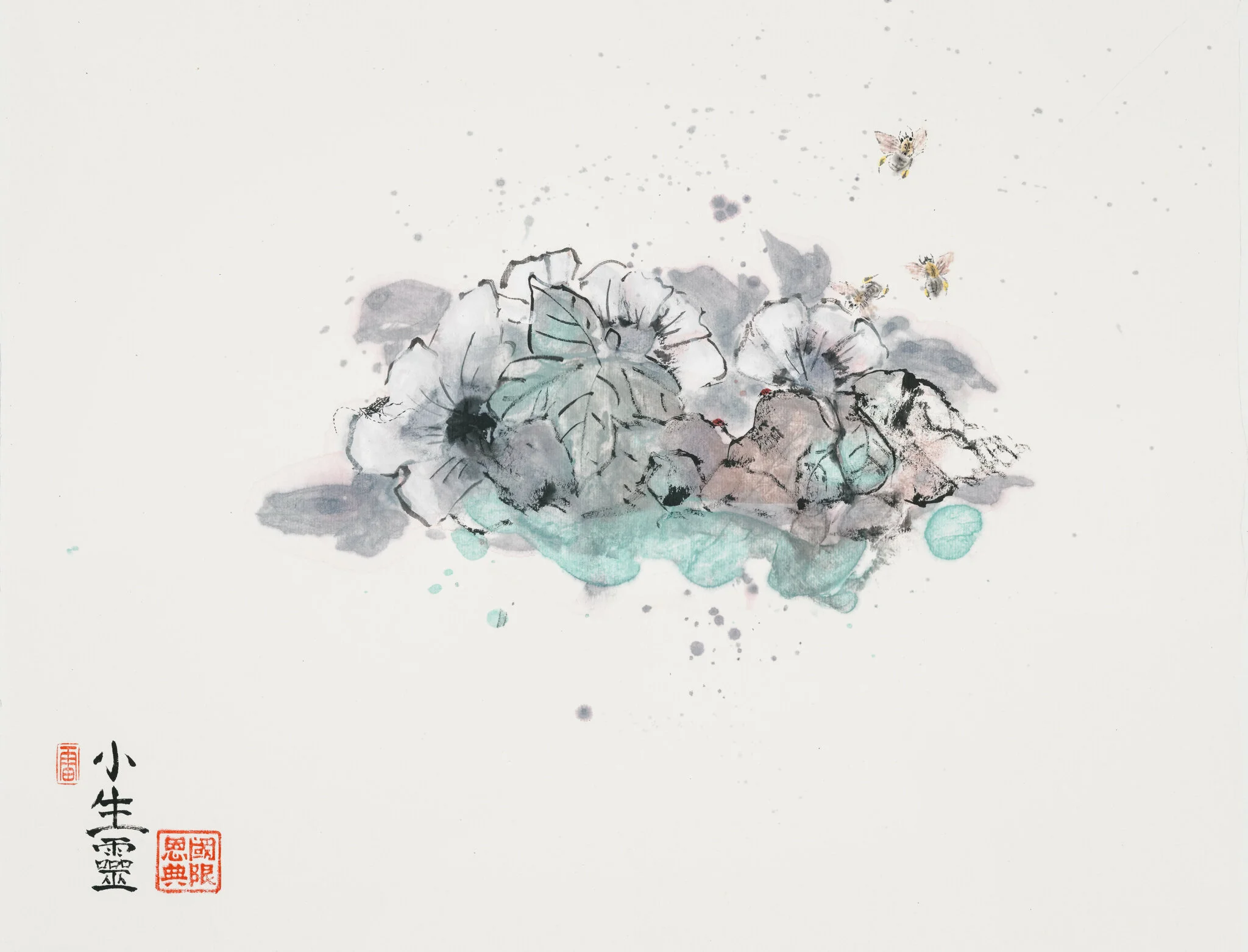
During the past 2 months, I was struck by the works of Qi Bai Shi that are called "Little Living Things" . Another translation for the phrase (xiao sheng ling) is "Little Souls". Qi was an expert in painting small creatures-- insects, birds, pond fish. The care he gave to these simple things presented a clear message-- all the creation is spectacular and fascinating and valuable. I decided to devote some time to the little souls. Here are two of the works in that thread.
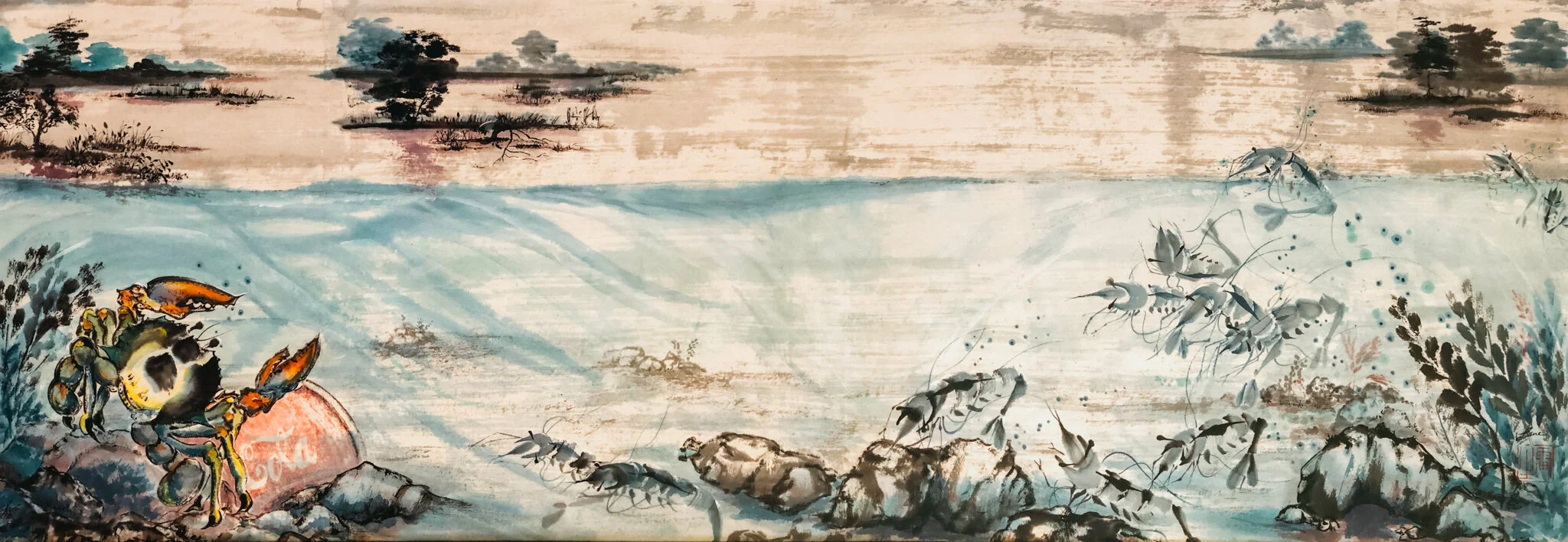
View From the Shallows
In his book, Refractions, Fujimura describes how pragmatic utilitarianism’s predominance in America gutted the culture and damaged our aesthetic sensibilities. In order to provide more detail he references the industrialization principles of labor and manufacturing efficiency put forward by Frederick Taylor. In many ways, these principles undergirded healthy science and promoted wise industrial use of machines in the 19th and 20th centuries, but when applied similarly to people the results were dehumanizing. People are not machines and our essence (as I assert in the earlier section about man being made in the image of God) and its value is invisible, spiritual, and unquantifiable. Here are some of Taylor’s main tenets:
· The primary goal of human labor is efficiency.
· Technical calculation is in all respects superior to human judgment
· Human judgment cannot be trusted because it is plagued by laxity, ambiguity, an unnecessary complexity.
· Subjectivity is an obstacle to clear thinking.
· Whatever cannot be measured either does not exist or is of no value.
· The affairs of citizens are best guided and directed by the experts.
Another recent book by Nicholas Carr called “The Shallows” also asserts that the digital tech-driven age of short, incomplete online engagement with information promotes a similar view of man, a dehumanizing view.
Fujimura insists that in its essence, art transgresses such damaging cultural conventions because these notions attack the innate and distinctive worth of people. Art in its unmeasurable, extravagant, subjective, and ambiguous power reminds of this fact, and by doing so, it affirms our humanity. Art affirms that which separates us from our machines and the social and economic appeal of materialistic life.
I've done several paintings that depict a liminal space that mediates between industrial principles and more unquantifiable human values. This one called "View from the Shallows" depicts that coke can and the water bottle after they have disappeared below the surface of the marsh water. Somehow, they become part of the natural beauty that continues to express itself around them.
“Yang-ish” in the Time of Covid-19
I recently saw that The Virginia Beach Art Center Artist Gallery is welcoming artists to exhibit works that address the stresses and expressions of courage, the hopes and fears, and challenges of the Covid 19 crisis. They are calling the exhibit, " Pandemic '20". I wanted to contribute and decided to start with a pour to symbolize the high level of uncertainty surrounding the spread of the disease and the emergent quality of the response.
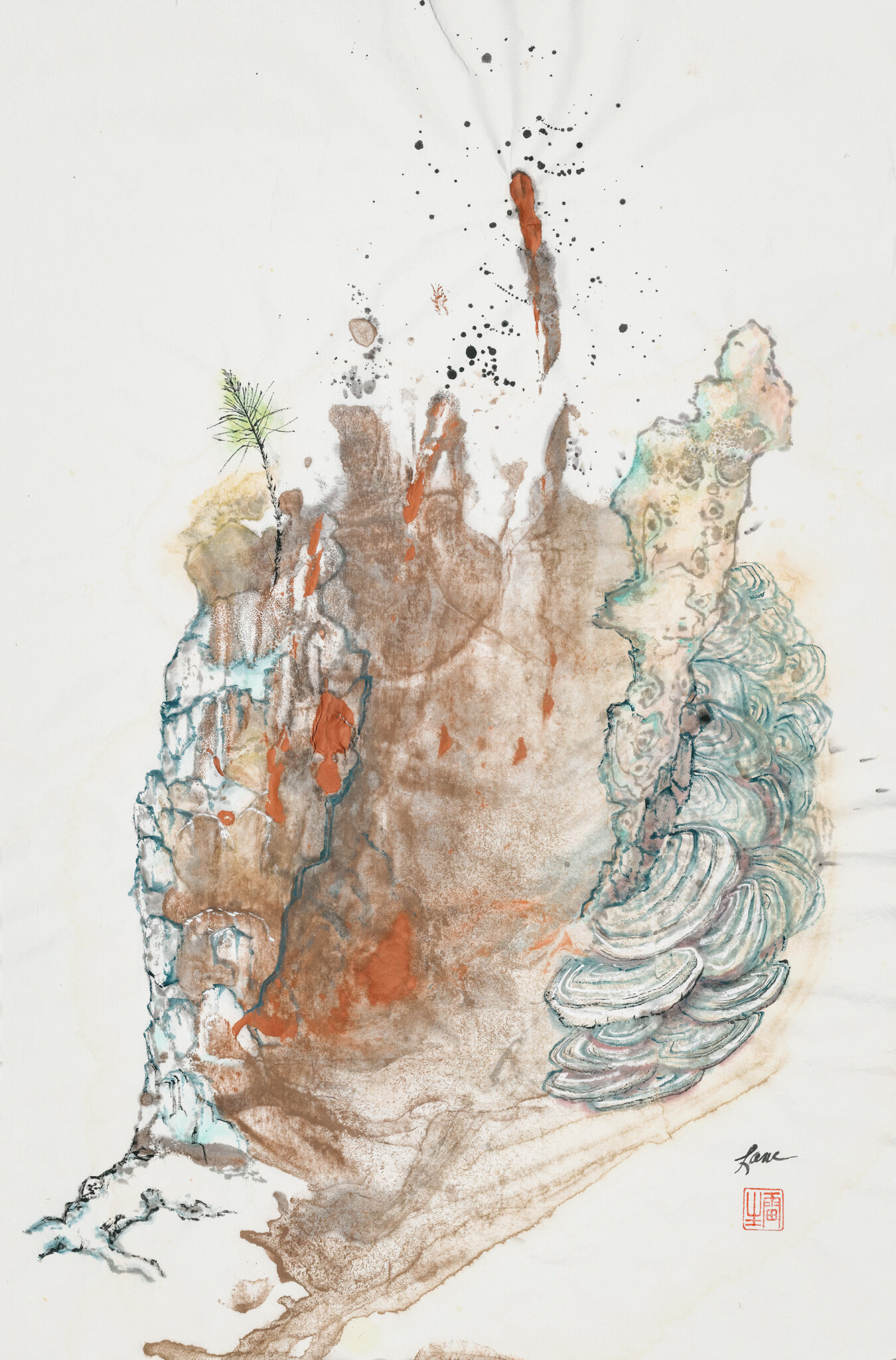
As I thought more about the subject matter, I choose earthy pigments that suggest both decay as well as fertility. After doing 4 pours, I chose one that reminded me of an old decaying pine stump. The pour was very "yin-ish" and fluid. I decided to add decaying bark with dry ink brush, light shades of stone green and indigo, and a small pine seedling in ink and spring green at the top symbolizing hope. The title is "Hope Springs Up".